A Differentiable General Circulation Model
JAX-GCM (JCM) is a differentiable atmospheric General Circulation Model (GCM) written entirely in JAX, designed to bridge traditional climate modeling with modern machine learning. Version 3 spans a wide range of complexity within a single code base: from the extremely fast, simple SPEEDY physics through to the full-complexity ECHAM physics, now including online (prognostic) aerosol. Every configuration runs on a single GPU and remains end-to-end differentiable.
A Range of Complexities
SPEEDY: fast and simple Simplified-physics configurations (adapted from F. Molteni’s SPEEDY scheme) that are cheap enough for rapid experimentation, large ensembles, and ML training loops.
ECHAM: full complexity ECHAM6/ICON-A-style physics including radiation (RRTMGP, with an optional neural-emulated radiation backend that is roughly 4x faster), convection, one- and two-moment cloud microphysics, turbulence, surface processes, and gravity-wave drag. A T63L47 ECHAM climate simulation costs roughly 23 seconds per simulated day on a single GPU.
ECHAM with online aerosol
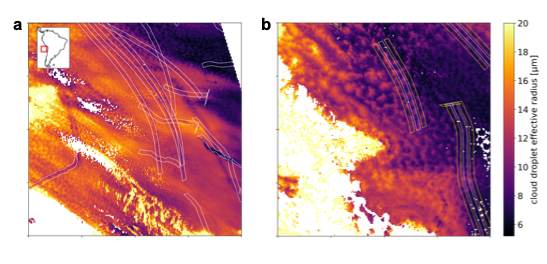
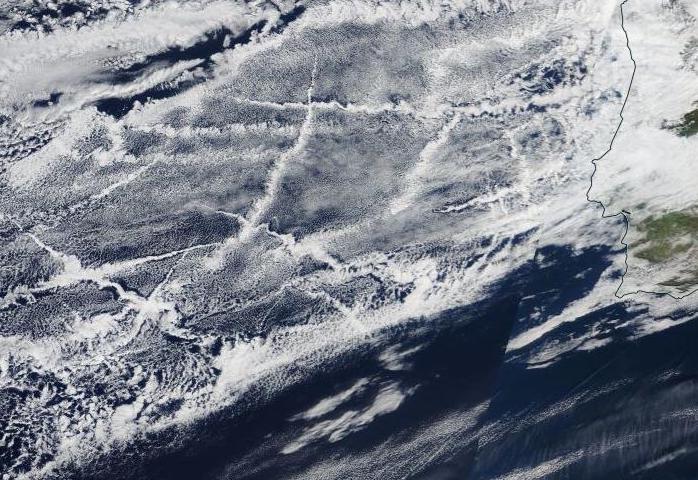
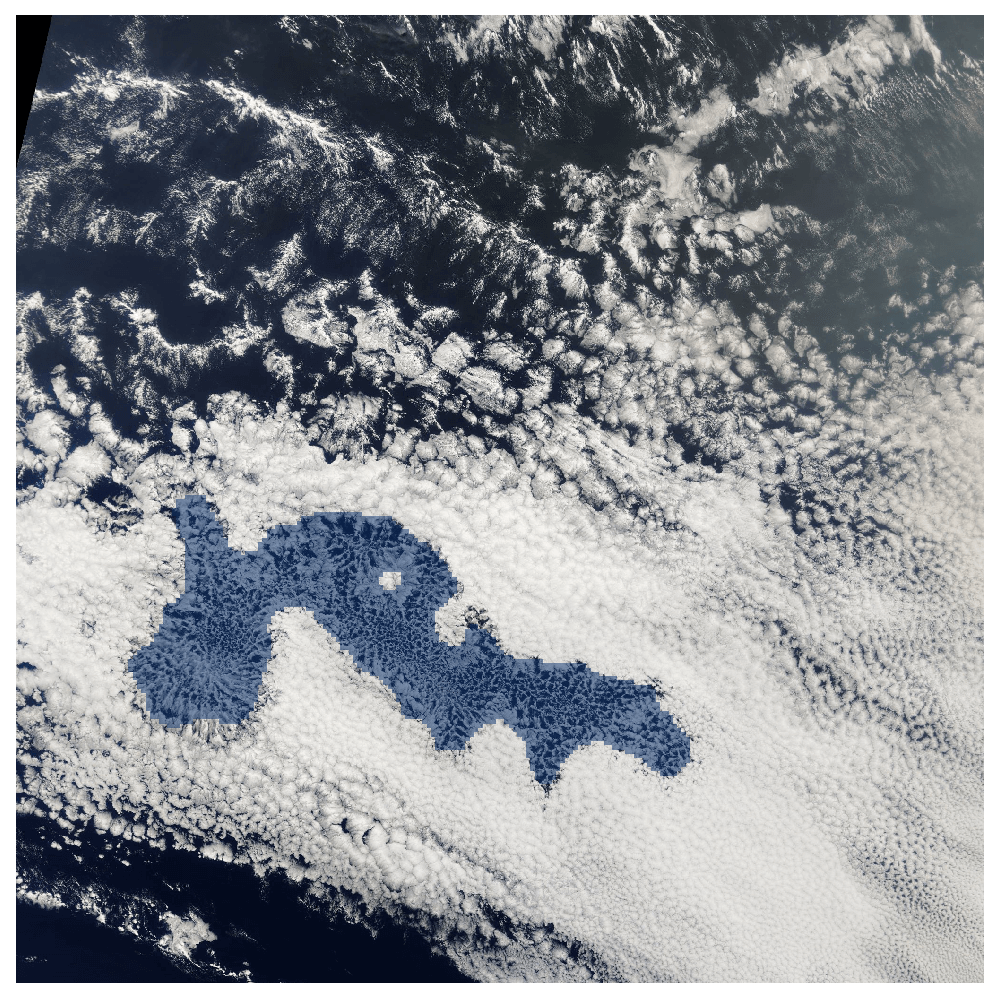
Prognostic aerosol (the JAM scheme, with an ECHAM-HAM M7 configuration also being added) is coupled to cloud microphysics and radiation, giving interactive aerosol-cloud and aerosol-radiation effects. It still runs on a single GPU and remains fully differentiable. The online-aerosol configurations need the optional extra (pip install "jcm[mam4]").
Move between them with one flag Switch from lightweight SPEEDY to full ECHAM with online aerosol by changing one configuration flag, or compose anything in between, term by term, through a composable-physics API.
Key Features
Fully Differentiable Every component of the model supports automatic differentiation, including the aerosol and cloud microphysics. Outputs are differentiable with respect to physics parameters, initial conditions, and boundary conditions, enabling gradient-based calibration, data assimilation, and inverse modeling.
GPU/TPU Accelerated Leverages JAX’s just-in-time (JIT) compilation to run the same configuration on CPU, GPU, or TPU.
Flexible Resolution Spectral resolutions from T31 (coarse, ~4°) up to T425 (~0.28°) allow users to balance computational cost with simulation fidelity.
ML-Ready Architecture Designed from the ground up for hybrid physics-ML workflows, parameter optimization, and emulator development.
Technical Foundation
JAX-GCM combines:
- Dinosaur Dynamical Core: Google Research’s spectral dynamical core handles atmospheric dynamics
- SPEEDY, Held-Suarez, and ECHAM Physics: Modular physics packages, including SPEEDY (adapted from F. Molteni’s simplified parameterization scheme), all implemented in JAX
- Modern Python Stack: Built on Python ≥3.11, XArray, and the scientific Python ecosystem
Use Cases
The differentiability of JAX-GCM opens new research frontiers:
- Parameter Optimization: Gradient descent through the entire model for optimal parameter estimation
- Data Assimilation: Efficient incorporation of observational data into model states
- Hybrid ML Models: Seamless integration of neural networks into physical parameterizations
- Climate Sensitivity Studies: Rapid exploration of model responses to perturbations
- Aerosol-Cloud-Climate Studies: Gradient-based exploration of aerosol effects with online aerosol on a single GPU
- Emulator Development: Training fast surrogate models with full-physics guidance
Get Started
Visit the JAX-GCM GitHub repository to explore the code and examples, or read the documentation (including the v2-to-v3 migration guide). Install with pip install jcm (or pip install "jcm[mam4]" for online aerosol). The project welcomes contributions from the climate science and machine learning communities.